




Weight fluctuation clothes: what actually works
Buy for your largest comfortable day, then let a stretch-and-recovery knit or full covered elastic waistband take up the slack on smaller days.
What "weight fluctuation clothes" actually means
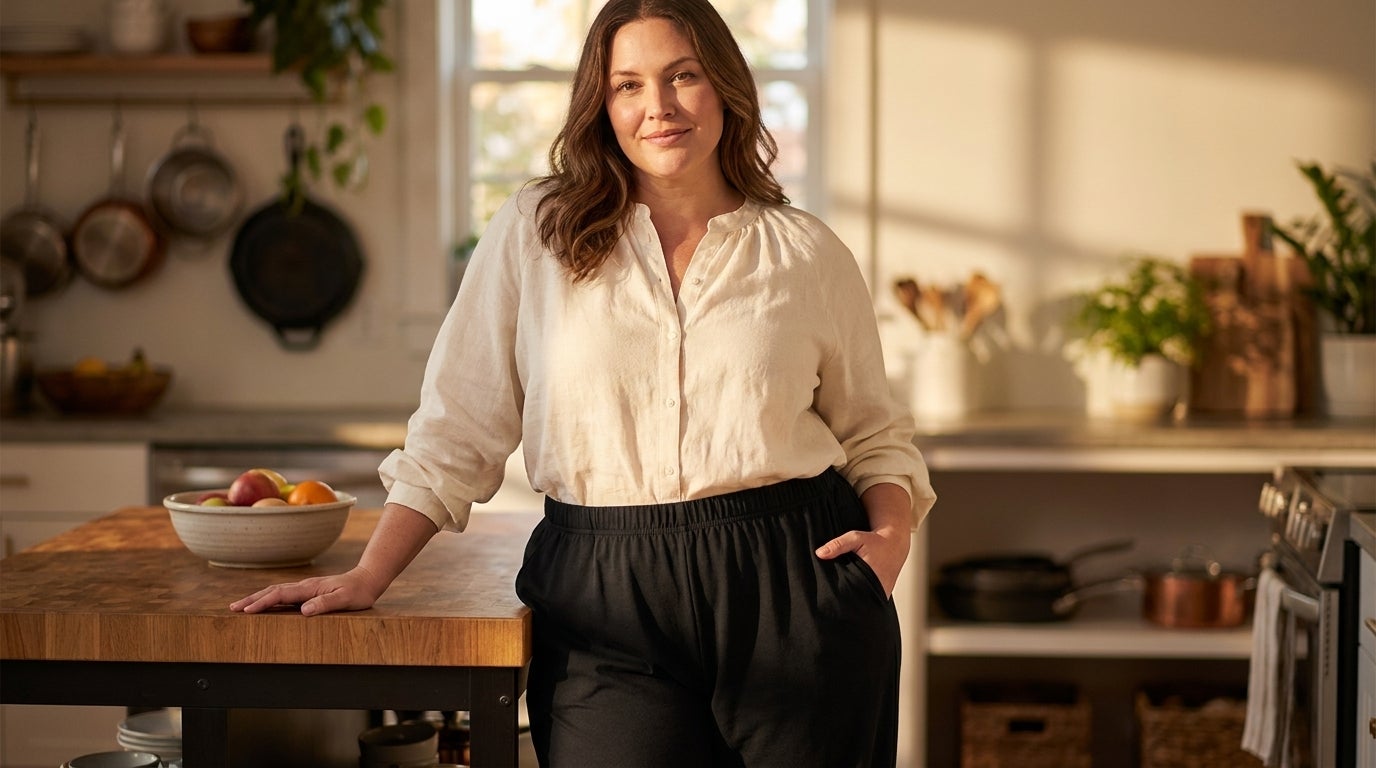
Weight fluctuation clothes are pants, shorts, and capris built to stay comfortable across a body that moves within its normal range — day to day, week to week, month to month. What makes them work isn't a fixed cut sized to one measurement. It's the mechanism: a full covered elastic waistband, or a stretch-and-recovery knit that expands and then returns to shape.
Hormonal cycles, water retention, and an ordinary day of eating and moving can all shift your waist measurement by a real amount. A rigid waistband treats that shift as a problem to solve with a different size. A flex-fit waistband just handles it.
Why sizing for an "average" day backfires
If you size for how you feel on an average day, a fixed waistband will be tight on your biggest days and loose on your smallest — so you either avoid fitted pieces or keep buying new sizes. For garments you'll wear across a fluctuating month, size for your largest comfortable day and choose a stretch-and-recovery knit or full covered elastic waistband. It sizes down comfortably on smaller days instead of gapping, so you're not doing sizing math every time your body shifts.
This is dressing the body you have, today — not the body you're hoping to fit into next month. The range is the point, not a destination.
How to spot a waistband built for a body in motion
Two mechanisms actually flex with you. A full covered elastic waistband is neatly constructed fabric-over-elastic that sits comfortably and stays in place without digging in on a bigger day or slipping on a smaller one. A stretch-and-recovery knit is a fabric — usually a cotton blend — that stretches with movement and pulls back to a smooth, polished look instead of bagging out.
Honest limit: neither mechanism absorbs unlimited change. A covered elastic waistband and a stretch-recovery knit are built for the ordinary give of a normal month, not a full size jump. If your size has changed for the season, size for where you are now and let the fabric take the rest.
The edit: knit bottoms built to move with you
Two picks worth knowing, organized by what they solve.
- 7-Day Wide-Leg Elastic-Waist Stretchy Knit Pant — for everyday wear where you want room to move. A soft, breathable cotton-blend knit stretches while keeping a smooth, polished look, over a full covered elastic waistband designed to stay put.
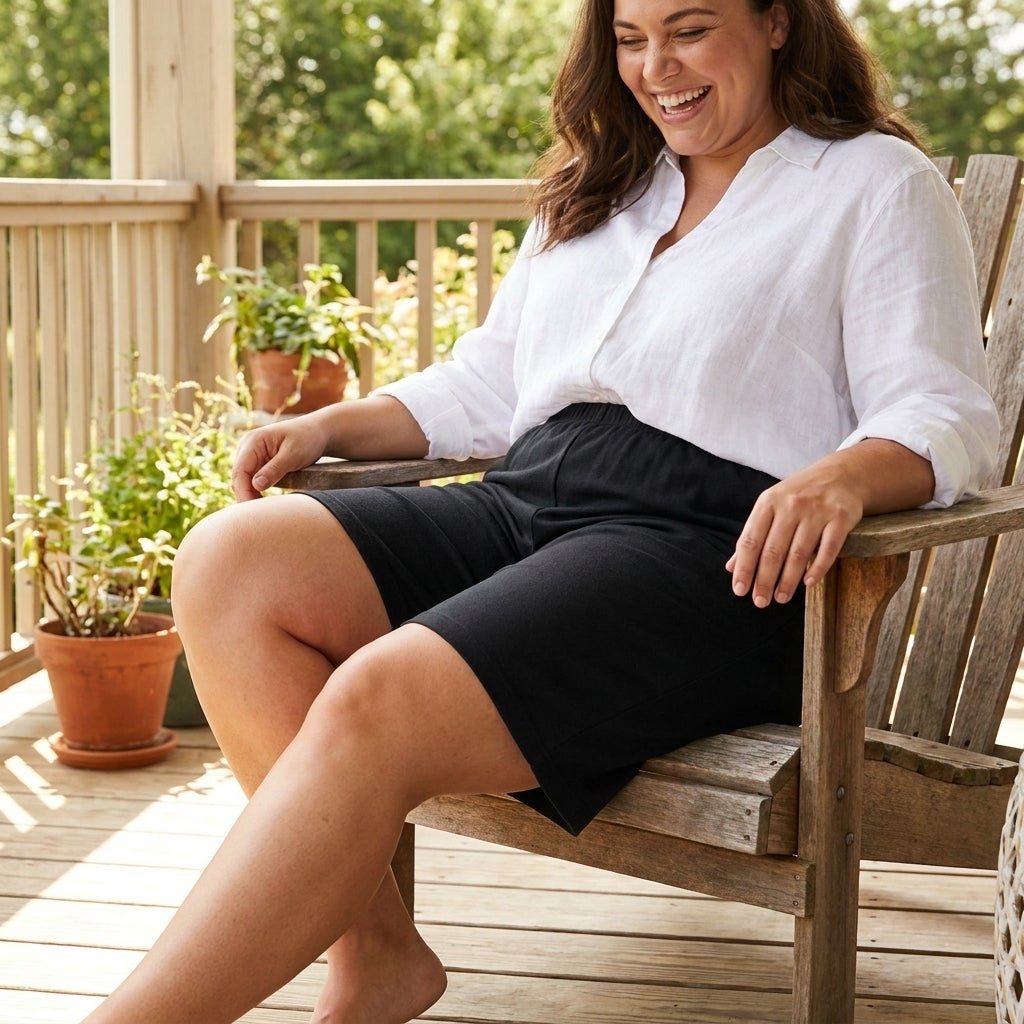
- 7-Day Straight-Leg Pull-On Knit Short — for warmer days and travel. A soft cotton/poly interlock knit holds its structured shape wash after wash, with the same full covered elastic waistband.
Start with the our full array of Woman Within knit shorts, capris and pants styles if you want to compare lengths side by side. Prefer more give through the leg? Our leggings use the same stretch-and-recovery logic in a closer fit.
Related terms worth knowing
- Stretch-and-recovery fabric
- A knit that stretches under movement and returns to its original shape instead of loosening over time.
- Full covered elastic waistband
- Elastic fully enclosed in fabric, built to sit smoothly against the body rather than a bare exposed band.
- Smocked back
- A gathered-elastic construction at the back waist that expands with movement while the front stays flat and polished.
- Flex Fit
- Woman Within's term for garments engineered with give built into the construction, not just the fabric.
Frequently asked questions
Is it normal for weight to fluctuate by several pounds?
Yes. Hormonal cycles, water retention, and ordinary daily life can move the number on the scale and the fit of a waistband within the same week. It doesn't mean anything has gone wrong.
How much stretch does a covered elastic waistband have?
Enough to handle a day-to-day shift comfortably — it's built for the ordinary range of a normal month, not a full size change. For a bigger jump, size for where you are now.
Will a knit pant still fit in a few months?
A stretch-and-recovery knit and a full covered elastic waistband are built to hold their shape wash after wash, so the fit you get on day one is the fit you keep.
What size should I buy if my weight changes?
Size for your largest comfortable day. A stretch-and-recovery knit or covered elastic waistband will size down comfortably on smaller days instead of leaving you gapping.