





How adjustable-waist plus size clothing actually works
Fit that adjusts relies on three mechanisms: smocked or covered elastic, stretch-and-recovery knit, and flexible bra bands. Shop the mechanism, not the size.

"Adjustable waist" is a construction detail, not a size claim. A garment adjusts because of a specific mechanism built into it: a covered or smocked elastic waistband, a stretch-and-recovery knit, or a flexible band-and-strap system in bras. Once you know the mechanism by name, you can shop for it directly instead of guessing from a photo.
Why the mechanism matters more than the number on the tag
A size number describes one measurement on one day. The mechanism describes how much room the garment has around that number, so it keeps sitting right whether today looks like last month or not.
Bodies are in motion — day to day, month to month, year to year. A garment built around a single point fits for a season. A garment built around a mechanism fits the range, not a destination, which is the whole idea behind Woman Within bras and bottoms designed with real give built in.
The full covered or smocked elastic waistband
Covered elastic is a continuous elastic band wrapped in fabric so it doesn’t sit exposed against your skin. Smocking is different: rows of elastic thread are stitched through the fabric itself, gathering it into a shirred panel that pulls in and releases point-by-point, closer to a custom fit than a single flat band.
The 7-Day Straight-Leg Elastic-Waist Stretchy Knit Pant uses a full elastic waistband, smoothly finished for a secure, pull-on fit that sits comfortably at the waist without digging or gaping. The Elastic-Waist Knit Short takes the smocked route instead, building in ultra-stretchy ease through a smocked elastic waistband. Both styles from Woman Within are forgiving; they just get there differently.
Stretch-and-recovery knit: the fabric side of fit
A stretch-and-recovery knit expands under movement and returns to its original shape afterward, so the give isn’t limited to the waistband. This is what makes a knit pant or short feel like it moves with you through a full day rather than only at the waist. Look for the term on the product page — it tells you the stretch is built into the fabric, not just one seam.
Flexible bra bands and adjustable straps
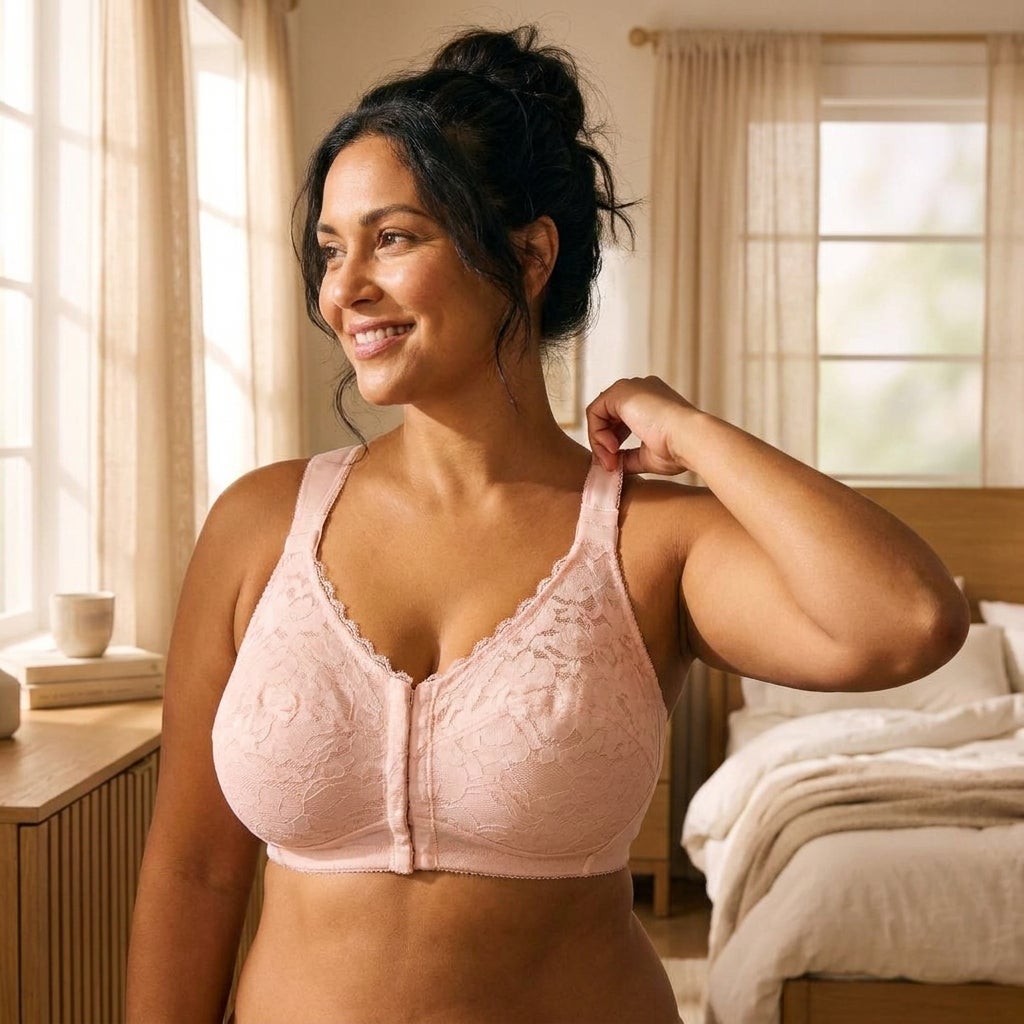
In bras, the adjustable mechanism usually lives in two places: the band and the straps. The signature Woman Within Front-Close Wireless Posture Bra pairs wider straps with a power mesh crisscross back, so support adjusts across the shoulders and upper back instead of relying on one narrow strap to do all the work.
A band and cup range still matters — no strap system replaces the right band size — but wider straps and a mesh back are what keep a bra comfortable as your day, or your shape, shifts.
What to check on the product page before you buy
Most product pages name the mechanism if you know what to look for. Here’s what the common phrases actually tell you about fit.
| What the page says | What it means for fit |
|---|---|
| Full elastic waistband | Give runs all the way around, not just at the sides. |
| Smocked waistband or smocked back | Shirred elastic threads pull in and release closer to the body than a single flat band. |
| Covered elastic | The elastic is wrapped in fabric, so it won’t dig in or show through other layers. |
| Stretch-and-recovery knit | The fabric itself expands and snaps back — the give isn’t limited to one seam. |
| Wider straps or crisscross back | On bras, this describes adjustable support at the shoulder and back, separate from band size. |
Frequently asked questions
What’s the difference between smocked and plain elastic?
Smocking gathers fabric with rows of elastic thread, so it pulls in and releases point-by-point. Plain elastic is one continuous band — simpler, with less shaping to the body.
How much does an adjustable waistband actually stretch?
It varies by garment, so check the product’s stated fit details rather than assuming. A full elastic waistband typically gives more all-around than elastic limited to the side panels.
Does the bra band adjust, or only the straps?
Both can contribute. Wider straps and a crisscross or power mesh back add adjustable support at the shoulder and back, while the band itself is sized separately, so check both.
Do stretchy waistbands hold up over repeated washing?
Covered and smocked elastic are built to recover wash after wash, though any elastic loses some stretch over years of wear. Following the Woman Within garment's care label helps it keep its give longer.