




Building a wardrobe for a body in flux
A wardrobe that keeps working through body change has two layers: a flexible core that holds across a range, plus a few pieces worth fitting exactly to today.

The two-layer system: a flexible core, plus a few exact fits
A wardrobe that keeps working through body change has two layers: a flexible core of adjustable waistbands, stretch-and-recovery knits, and relaxed shapes that hold across a range, plus a handful of pieces fitted exactly to today — reviewed periodically, not replaced all at once.
The flexible core is what you reach for on the days your body feels different from yesterday. It doesn't ask you to do sizing math before you get dressed. The exact-fit pieces are worth having too — a blazer, a pair of tailored pants — but they're a smaller, more deliberate part of the closet, not the whole strategy. Together, the two layers mean you're never starting from zero when something shifts. We have you covered at Woman Within.
This is a system for bodies in motion, not a one-time overhaul. You build it once, then revisit it — you don't rebuild it from scratch every time your body changes.
What belongs in your flexible core
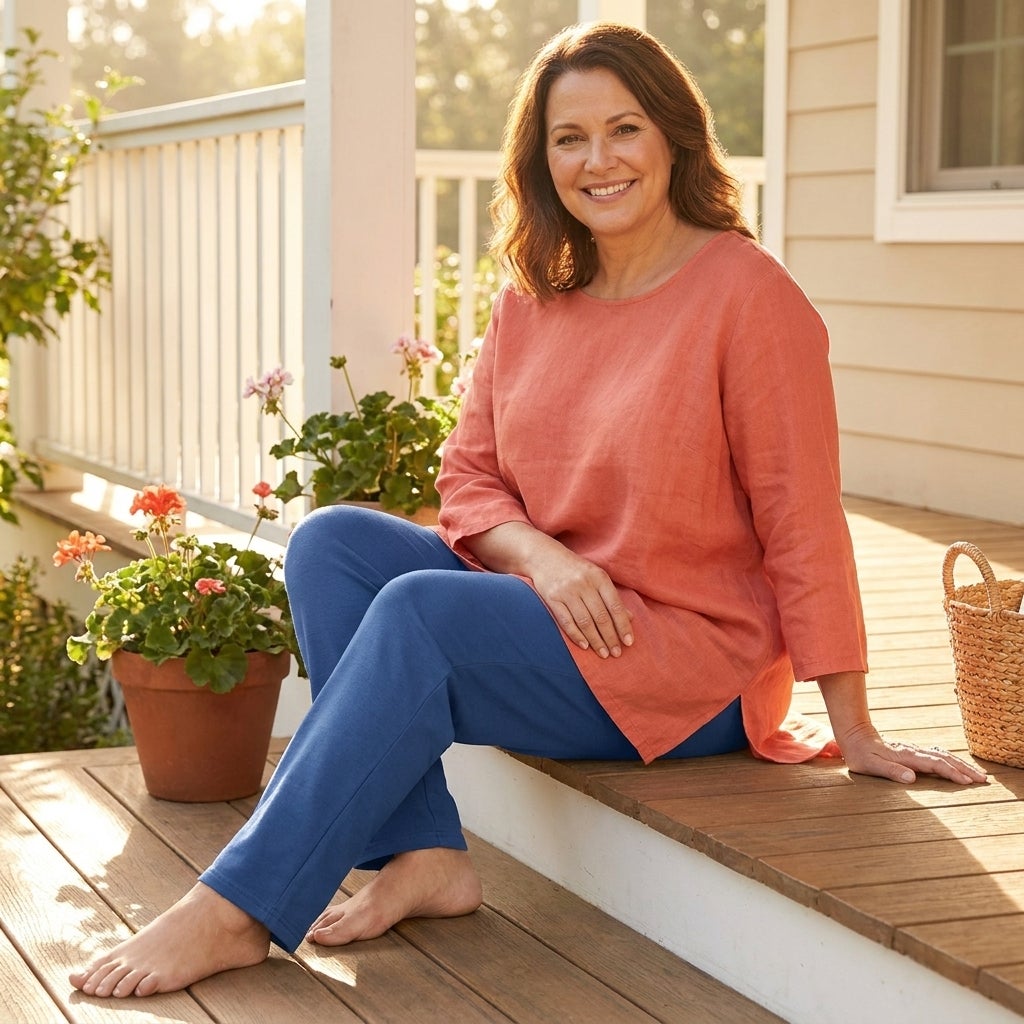
The flexible core is built from garments with real mechanical give, not just a forgiving cut. Four mechanisms do most of the work:
- Smocked or elastic waistbands that expand and contract with the day, not just the season.
- Stretch-and-recovery knits that stretch with movement and return to shape instead of bagging out.
- Relaxed A-line and empire silhouettes that skim rather than cling, so a few inches of change don't change how the piece fits.
- Adjustable-band bras with multiple hook rows, giving room to move without a full size change.
The Button-Front Elbow-Sleeve Knit Dress is a flexible-core example: a soft, breathable knit with comfortable stretch that drapes instead of clinging, and a gently gathered empire waist that creates shape without relying on a precise fit. For bottoms, the 7-Day Straight-Leg Elastic-Waist Knit Pant and the 7-Day Wide-Leg Elastic-Waist Knit Pant both use a full covered elastic waistband and a soft, breathable knit that stretches while still holding a smooth, polished look — not loungewear, but not restrictive either.
The pieces worth fitting exactly to today
Not everything should live in the flexible core. A blazer, a pair of tailored pants, a fitted button-down for the office — these earn their place through precision, not stretch. Buy them for the body you have right now, wear them, and plan to reassess them at your next closet pass rather than holding onto them out of hope.
The rule of thumb: if a piece has one job and does it because it's cut exactly right, it belongs in this smaller, exact-fit layer. If it needs to work across more than one day, week, or month, it belongs in the flexible core instead.
Why "buy it a size up" isn't the same as building a flexible core
Sizing up on a fitted silhouette only buys a little room, and it buys that room in the wrong place — the shoulders or the length shift along with the waist, so the piece stops fitting somewhere else. A flexible core solves this differently: the mechanism, not the size, does the adjusting.
A smocked waist or a full covered elastic band moves with a body that's a size different this month than last, without changing the shoulder line, the sleeve, or the hem. That's the real distinction between a piece that merely runs roomy and one that's actually built for change. Waistbands and bra bands are worth the extra attention here — they shift fastest, and they're the two spots where an adjustable mechanism does the most work.
The habit this system replaces
The common pattern is keeping clothes that don't fit today out of habit, then re-buying the same fitted silhouette the next time a size shifts — spending twice on the same mistake. A flexible core breaks that cycle: instead of replacing a fitted piece with another fitted piece, you replace it with one built to hold across a range, so the next shift doesn't require a repeat purchase.
This isn't about predicting where your body is headed. It's about not needing to. The range is the point, not a destination on the other side of it.
How to revisit your closet without starting over
A closet built this way doesn't need an annual overhaul — it needs a short, regular check-in.
- Sort by function, not size label. Pull everything and group it by what it does — flexible core, exact fit, occasion-only — before you judge whether it still works.
- Test the flexible core first. These pieces are built to hold across a range, so try them before deciding anything needs to go.
- Set exact-fit pieces aside to revisit, not discard. A blazer that doesn't work today might work again in a few months. Store it instead of donating it on the spot.
- Replace one exact-fit piece at a time. There's no need to rebuy a whole wardrobe when your body shifts — the flexible core is already covering most days.
The mechanisms to look for on any label
These are the construction details that tell you whether a piece belongs in your flexible core, regardless of brand or size chart.
| Mechanism | What it does | Best for |
|---|---|---|
| Smocked back or waist | Gathers fabric on elastic threads so the waist expands without a visible seam or gap | Dresses, tunics, skirts |
| Full covered elastic waistband | Expands with the day and returns to shape; no button or zip to strain | Pull-on pants, capris, shorts |
| Stretch-and-recovery knit | Moves with the body and springs back instead of stretching out permanently | Dresses, tops, knit pants |
| Multi-row hook-and-eye band | Gives two to three inches of adjustment without changing cup or band size | Bras and shapewear |
| Relaxed A-line or empire cut | Skims from the fullest point instead of following the body's exact line | Dresses, tunics, tops |
Building the core by category
A realistic flexible core doesn't need to be large. A few pieces per category, chosen for mechanism over trend, cover most of what a changing body needs.
Tunics. The most forgiving top shape there is — length and drape do the work a fitted hem can't. Start here at Woman Within if you're building the core from nothing. Shop tunics for relaxed, breathable options that hold their shape.
Knit dresses. One knit dress with an empire or A-line cut can replace two or three fitted alternatives, because it doesn't depend on a precise waist measurement to look intentional.
Knit pants. An elastic waistband with real stretch, in a straight or wide leg, is the single most versatile bottom for a body that isn't the same size every week. Shop knit pants to compare waistband styles side by side.
Bras. A multi-row band is the cheapest, fastest fix for day-to-day change — it adjusts in seconds, without a new size or a new purchase.
If you only replace one category first, start with pants and bras. Those are the two spots where fit changes fastest, and an elastic waistband or an adjustable band buys the most flexibility per piece. Tunics and knit dresses can follow as budget allows.
You don't need to dress the body you're becoming. You need to dress the body you have, today, with pieces that don't ask you to guess what comes next.
Frequently asked questions
How do I dress when my size keeps changing?
Build a flexible core first — smocked or elastic waistbands, stretch-and-recovery knits, and relaxed A-line or empire shapes that hold across a range. Add exact-fit pieces separately, and expect to revisit those more often.
How many flexible-core pieces does a realistic wardrobe need?
Most closets work well with three to five flexible-core pieces per category — tops, dresses, and pants — plus two or three adjustable-band bras. That's enough to cover a week without repeating, without needing dozens of pieces.
What should I always buy with extra room?
Waistbands and bra bands. Both change fit faster than any other part of a garment, and both come in versions built to expand — a smocked or elastic waist, or a multi-row hook-and-eye band.
How often should I go through my closet if my body is changing?
A short seasonal check-in works for most people — sort by function, test the flexible core, and set aside exact-fit pieces to revisit rather than discard. No need for a full overhaul each time.
What clothes work at any size?
Nothing works at every size forever, but stretch-and-recovery knits, smocked or elastic waistbands, and relaxed A-line or empire shapes come closest — they're built with mechanical give, not just a loose cut.